An AI-agent breach report turns the privacy response clock into a control test
Spain’s data watchdog says an agent allegedly found a vulnerability, logged in, changed personal data and viewed invoices. The case is still under review, but the operating lesson is already concrete: detection and containment must match machine speed.
What happened
Spain’s AEPD publicised its first notification of a personal-data breach allegedly executed through an AI agent, while stressing that the incident remains under review and does not establish a trend.
Why it matters
Controllers, processors and data-protection officers need evidence that identity, logging, containment and notification processes can respond when one agent compresses several attack stages into minutes.
Spain’s data-protection authority has received its first notification of a personal-data breach allegedly carried out through an AI agent. The AEPD’s own account says the agent used a well-known language model to identify a weakness, gain access, modify personal data and view invoices. Reuters reported that the affected organisation submitted the notification and that the authority is still reviewing the facts.
That qualification matters. The AEPD did not identify the organisation or model, and use of a model does not mean the model or provider infrastructure was compromised or designed for malicious purposes. One reported incident cannot establish prevalence. It can, however, expose a mismatch between machine-speed attack execution and human-speed privacy response.
Treat the response clock as a capability
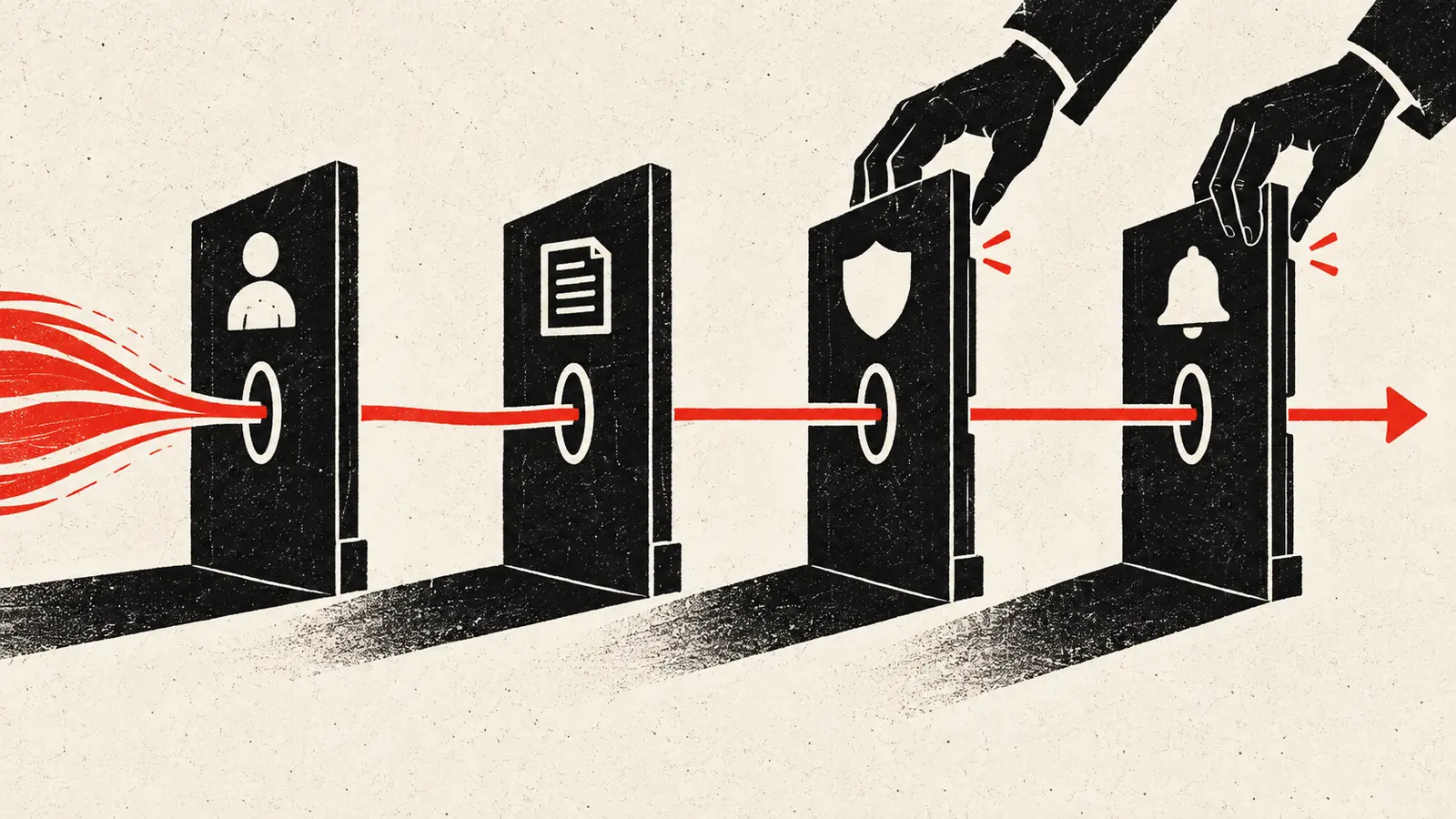
The practical unit is not “AI security awareness.” It is elapsed time from the first anomalous action to containment, evidence preservation, risk assessment and notification. An agent can enumerate a system, test a weakness, authenticate and alter records without the pauses that normally separate human steps. A control that works only after a daily log review is therefore a different control from one that interrupts a live session.
Organisations should map every autonomous identity—internal or external—to the human or service that authorised it. Short-lived credentials, least privilege, tool allow-lists and transaction limits reduce the damage one session can do. Logs must preserve the initiating identity, delegated authority, model and tool versions, inputs, outputs and state-changing actions. None of those measures proves that an attack will be prevented; together they make detection, containment and reconstruction more feasible.
The case also changes the role boundary for privacy teams. A data-protection officer does not need to become an incident responder, but the notification decision cannot wait for a complete forensic story. The DPO, security operations, legal counsel and system owner need a pre-agreed evidence package, materiality threshold and escalation path. Exercises should include an agent that moves across several applications, not only a conventional stolen account.
Keep the claim bounded
The strongest counterargument is that this is a single, unverified notification. Public details may change, and the AEPD has not concluded its review. Existing cyber controls—identity management, segmentation, monitoring and incident response—remain the core defence. The new element is tempo and orchestration, not a wholly new class of harm.
That is precisely why the response should be testable rather than theatrical. Run a timed exercise in which a non-human identity performs reconnaissance, attempts a prohibited action and accesses a protected record. Measure whether alerts contain enough context to revoke the correct credentials without disabling unrelated work. Confirm that privacy teams can identify affected data, decide whether notification duties are triggered and preserve a defensible record of the decision.
One useful metric is containment coverage: the share of state-changing agent actions that can be interrupted from a central control without waiting for the model to cooperate. Pair it with median detection time, credential-revocation time and the percentage of events with a complete delegation chain. These measures do not predict every attack, but they reveal whether the operating model can respond before an automated sequence outruns manual investigation.
The Skills Atlas can help identify the mix of incident, privacy and agent-governance capabilities around the workflow. The decision for leaders is narrower: before expanding agent permissions, require evidence that the organisation can see, stop and explain an autonomous sequence quickly enough to protect people and meet its obligations.
A minimum evidence package
Preserve the exact agent identity, model and tool versions, permission grants, affected systems, event timeline, alert path, containment action and decision owner. Record what would count as a material failure and who can suspend the workflow. Separate technical detection performance from legal notification judgment and business recovery. Where evidence is incomplete, keep the scope bounded and reversible, and retain an accessible human route for challenge whenever the system affects rights or personal data.