A cheaper frontier model should expand retesting, not shorten the release gate
Anthropic says Claude Opus 5.5 delivers Fable-level performance on most work at lower cost. The buyer decision is not whether to switch on a headline, but which additional local tests the lower run cost now makes affordable.
What happened
Anthropic released Claude Opus 5.5 on 22 September, pricing it at $4 per million input tokens and $20 per million output tokens and saying typical token-billed work costs about 40% less than Opus 5.
Why it matters
Lower model cost can widen workload-specific evaluation, regression testing and human review. It does not make vendor benchmarks, safety evaluations or customer anecdotes equivalent to production evidence in a buyer’s own environment.
Anthropic introduced Claude Opus 5.5 on 22 September. The company says it performs at the level of Claude Fable 5.1 on most work and costs about 40% less than Opus 5 for typical workloads billed by token. Published pricing is $4 per million input tokens and $20 per million output tokens, with cheaper cache reads. Reuters reported the launch, external pre-release testing and the company’s benchmark and safety claims. The Verge described safeguard routing for some cybersecurity and biology requests.
Those facts change the economics of evaluation, not the evidence standard for deployment. A benchmark is run with a particular harness, effort setting, safeguard configuration and task distribution. Anthropic’s page discloses several such conditions, including that safeguard interventions routed some sensitive benchmark tasks to other models. That is useful context, but it is not a performance estimate for a buyer’s codebase, documents, permissions, languages or failure costs.
Spend the saving on a broader test matrix
The practical opportunity is to convert lower unit cost into more local evidence. Keep the current production model as a control and run Opus 5.5 on a stratified sample of real work: common cases, long-tail cases, high-consequence exceptions and deliberately adversarial inputs. Preserve the prompts, tools, retrieval snapshot, model settings, routing outcome and reviewer decision. Evaluate task completion, material errors, review time, escalation quality and total cost per accepted result rather than tokens alone.
Cheaper cache reads may matter for long-running agents, but they also encourage longer sessions and more tool calls. The test should therefore include cumulative permission use, stale context, recovery after interruption and whether the agent stops when evidence is missing. For sensitive workflows, record when a safeguard routes or refuses a request and whether the alternative path still satisfies the business and control objective. A safe refusal can be correct yet operationally unusable; an apparently successful answer can still be unsafe.
Separate vendor evidence from release evidence
External safety evaluations and system cards can inform test design. They should not be copied into a local risk register as if they certify a deployment. The buyer owns integration choices, data exposure, identity, tools, monitoring and the decision boundary. A model release can improve one component while an unchanged orchestration layer preserves the same vulnerability.
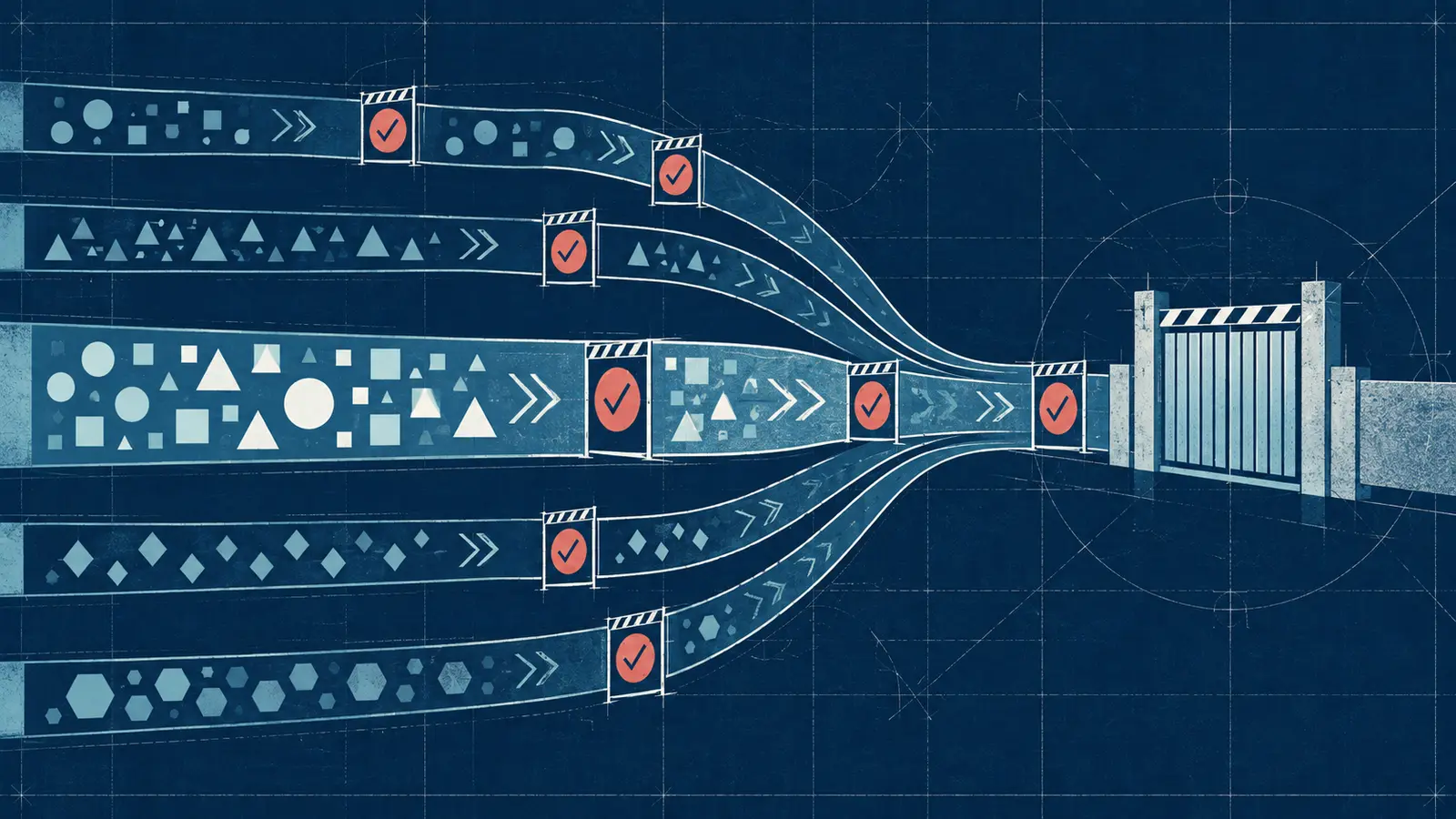
The strongest counterargument is speed: repeating a full evaluation for every model update may delay valuable improvements. The answer is a tiered gate, not no gate. Low-risk drafting can use a lighter regression set; state-changing agents, regulated decisions and privileged tools need a deeper suite and named approval. Reuse stable cases, automate deterministic checks and reserve scarce expert review for disagreements and high-impact failures.
Set the retest budget before the comparison begins. Allocate enough runs to estimate variation across repeated attempts, not only the best result, and reserve a holdout set that prompt authors have not tuned against. Record the current model's failure rate and reviewer time with the same instrumentation. If the new model succeeds by producing longer answers, more tool calls or more escalations, include those costs and operational effects. A release memo should state which workload slice improved, which remained uncertain, which safeguards changed and what rollback signal will be monitored after deployment. That memo turns a model choice into a reviewable operating decision.
Do not switch because a leaderboard moved, and do not ignore a material cost reduction. Use the saving to increase sample size, cover more failure modes and measure reviewer burden. The Skills Atlas can help assign evaluation and operational-accountability capabilities. The release decision should remain simple: approve only when local evidence shows that the new model improves the chosen workload without weakening its control envelope.