Continuous AI red-teaming needs reproducible findings, not a model menu
Palo Alto Networks has introduced a continuously updated AI red-team service using several frontier models. Buyers should evaluate the provenance, repeatability and closure of each finding rather than count how many models are involved.
What happened
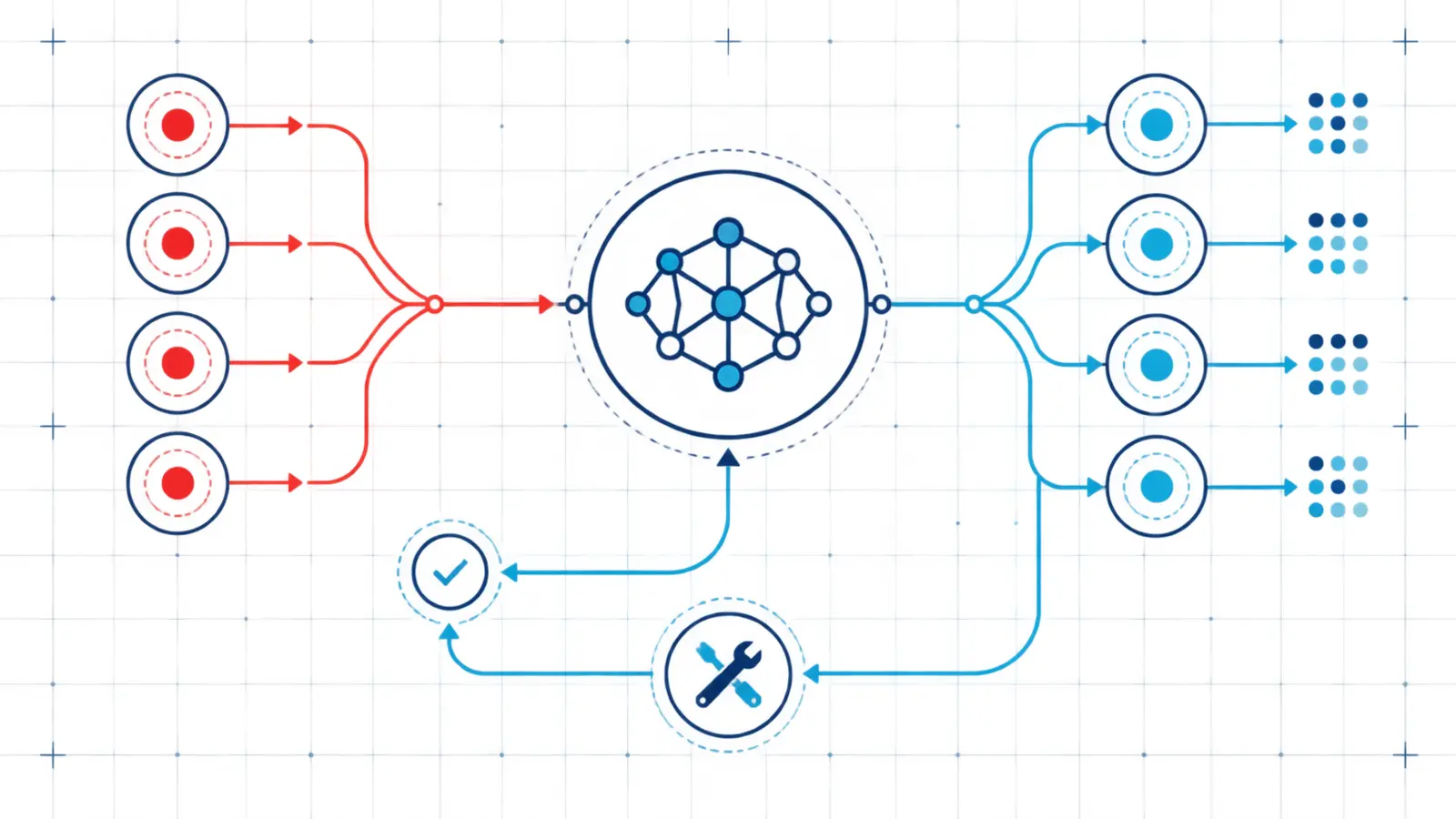
Palo Alto Networks announced Unit 42 Continuous Frontier AI Defense, a service that uses several models to generate and test attack paths against AI applications and updates its methods as threats and models change.
Why it matters
A changing model roster can broaden search, but it does not by itself make a finding reproducible, prioritised or closed. Security leaders need an evidence chain from test scope to remediation retest.
Palo Alto Networks announced Unit 42 Continuous Frontier AI Defense on 22 September. The company says the service combines several frontier models to generate attack hypotheses, exercise AI applications and refresh techniques as models and threats change. Reuters independently reported the launch and the involvement of models from Anthropic and OpenAI. Neither source provides an independent effectiveness study, customer sample or benchmark that would support a comparative performance claim.
The relevant operational signal is therefore not the number of models. It is the attempt to make red-teaming continuous rather than a one-off exercise before launch. AI systems change through model updates, retrieval data, tools, prompts, permissions and surrounding application code. A test that passed in one configuration can become stale even when the product name stays the same. Continuous testing can address that drift only if the organisation can tell exactly what was tested and reproduce the result.
Treat every finding as a testable object
A useful finding record should identify the target version, enabled tools, data boundary, identity and permissions used, seed inputs, relevant model settings, observed output, expected control and severity rationale. It should also separate a successful exploit from a plausible hypothesis that still needs confirmation. Where an external service cannot reveal proprietary attack logic, it can still supply a stable test case or replay mechanism that the customer can run in an agreed environment.
This matters because multi-model orchestration introduces its own variability. A model may propose a promising path on one run and not another. A different model may reinterpret a failure as success. A changing model roster can broaden exploration, but it can also make comparisons across time harder. Buyers should ask how the service controls randomness, records model and policy versions, prevents contamination between targets and distinguishes a newly discovered issue from a previously known weakness expressed differently.
Close the loop, not only the scan
Continuous discovery has little decision value without closure. Each accepted issue needs an owner, a deadline, a compensating control where immediate remediation is impossible and a retest against the changed system. The retest should preserve the original evidence and record whether the exploit is blocked, merely harder or displaced into another path. Aggregated dashboards are useful only after this finding-level chain is intact.
Procurement should therefore request a sample evidence package before buying. Security teams can score it for reproducibility, environment specificity, false-positive handling and retest quality. Engineering teams should verify that findings map to components they can change. Risk owners should define which severity levels block deployment and which can proceed with documented acceptance. Legal and privacy teams should confirm what test data leaves the environment and how long prompts, outputs and traces are retained.
The organisation should preserve negative results as well as confirmed vulnerabilities. A test that did not reproduce under a documented configuration can prevent repeated investigation and reveal environmental conditions that matter. Trend reporting should distinguish test-volume growth from a genuine change in risk. More probes, model calls or generated attack ideas do not automatically mean better coverage. Coverage should be mapped to assets, abuse cases and control objectives, with known gaps stated explicitly. Buyers can then compare service updates against their own threat model rather than a vendor-defined activity count.
The announcement is a product signal, not proof that continuous AI red-teaming is solved. The strongest buying criterion is whether another qualified tester can reconstruct the issue and verify its closure. Contract terms should make that evidence portable when a supplier changes. The Skills Atlas can help assign testing, evidence and incident-response capabilities, but the organisation still needs a local release gate and accountable decision owner.